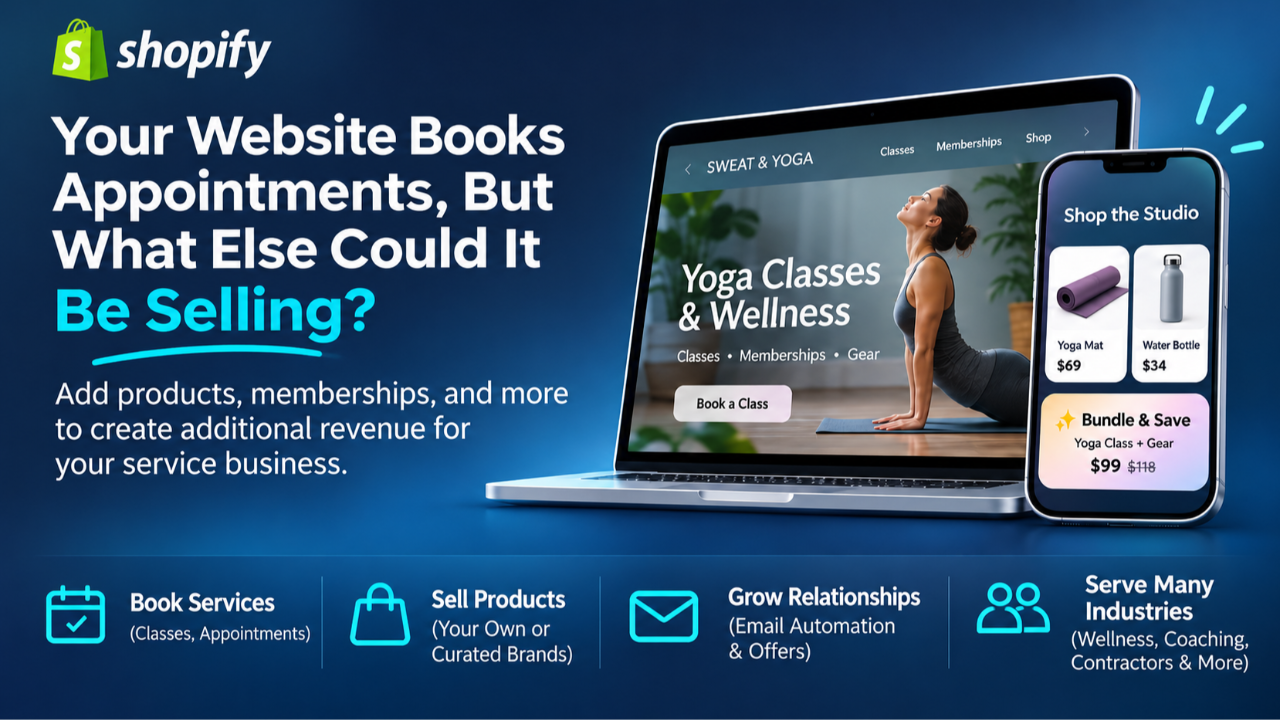
What if your website could generate revenue even when you're not working?
Imagine you're a yoga instructor, wellness practitioner, insurance agent, tax preparer, contractor, or consultant. Your website explains your services, allows people to contact you, and perhaps lets customers book appointments. But most of your income still depends on someone purchasing a service that you or your team must deliver.
Now imagine that same website could also sell physical products from other brands, offer digital downloads, promote affiliate products, sell memberships, and automatically follow up with customers based on their purchases and website activity.
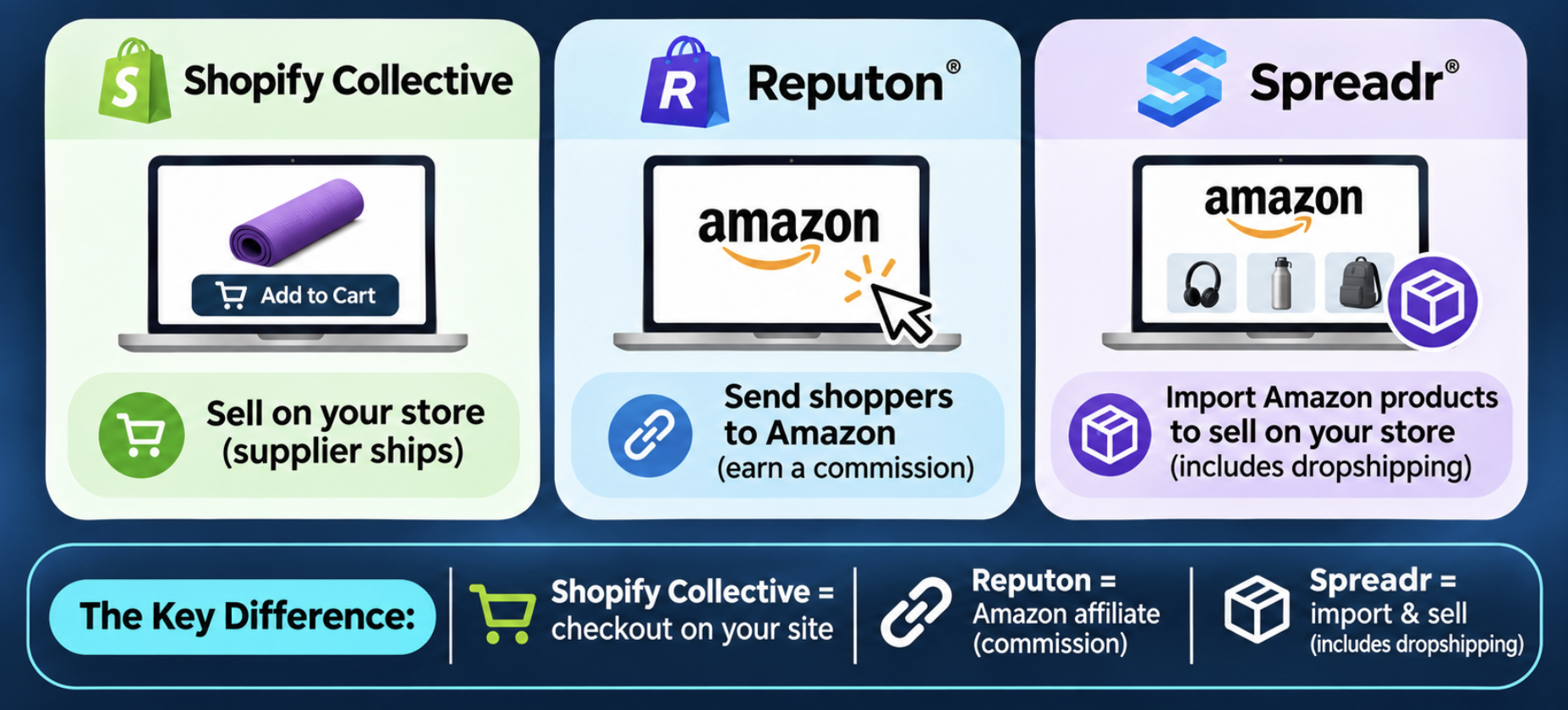
With Shopify, businesses can combine service pages, appointment scheduling integrations, product sales, blogging, email marketing, and customer management tools in one website. Apps such as Shopify Collective, Reputon Amazon Importer, and Spreadr Amazon Importer offer different ways to introduce products without stocking them yourself.
And when you connect Shopify with email marketing platforms like Klaviyo, you can do much more than simply send newsletters.
Let's look at how this could work for businesses that aren't traditionally considered online retailers.
Your Service Business Could Be Earning Revenue in More Ways Than You Think
Consider a yoga studio offering a $69 introductory package, $119 monthly membership, $219 unlimited membership, $299 class package, and annual passes.
These are all ways to generate revenue from the studio's services. Customers can select the option that fits their schedule, budget, and level of commitment. But the studio could also offer products that complement those services.
Imagine a customer visits your website to purchase a $69 yoga package. While browsing, they notice a premium yoga mat, meditation cushion, or weighted eye pillow.
They might purchase one of those products at the same time. Or they might return to your website at 11 PM, long after your last class has ended, and purchase a product for $69.
The difference is that you don't need to teach another class to generate that product sale.
Of course, a $69 product sale doesn't mean $69 in profit. You still need to account for supplier costs, payment processing, shipping arrangements, and other expenses. But you're creating another opportunity to earn revenue without adding more appointments to your calendar.
Combine Services and Products Into Packages
Let's say you offer a ten-class yoga package for $299. You could create a premium package that includes those classes, a yoga mat, and a meditation journal. Or offer an introductory package with an optional meditation accessory.
You might even create a holiday gift package combining a yoga gift card, a wellness product, and access to a recorded meditation session.
Shopify supports product bundles and discounts through its own features and compatible apps. If classes are sold through separate booking software, combining everything into a single checkout may require additional integration or configuration.
Offer Volume Discounts
Suppose you sell yoga blocks for $20 each. You could create offers such as:
-
One yoga block for $20.
-
Two yoga blocks for $36.
-
Four yoga blocks for $68.
A customer building a home yoga space might prefer purchasing several products together.
Shopify supports discounting and compatible volume pricing apps. The available options depend on the products, selling arrangement, and app configuration.
Sell Digital Products Without Physical Inventory
You could also offer recorded meditation sessions, downloadable wellness journals, online workshops, training videos, or instructional resources.
For example, a yoga instructor could create a $29 recorded relaxation session that customers can purchase at any time.
Unlike a live class, that recording doesn't require the instructor to be present for every purchase.
Shopify supports digital product sales through downloadable product apps. It can also support appointments, classes, and memberships through compatible applications.
The setup depends on how each offer is delivered, booked, renewed, or redeemed. Shopify doesn't automatically replace specialized studio management software.
Shopify Collective: Sell Products From Other Brands Without Purchasing Inventory
One of the opportunities I want more service business owners to understand is Shopify Collective.
Imagine you own a wellness spa. Your clients come to you for facials, skincare treatments, and other services. They also ask which products they should use at home between appointments.
Instead of purchasing large quantities of products and storing them at your business, you may be able to partner with participating brands through Shopify Collective.
Shopify Collective allows eligible Shopify retailers to sell approved products from other Shopify businesses.
Here's how the process works:
-
You connect with a participating supplier and select products you're approved to sell.
-
Those products appear on your Shopify website.
-
Your customer purchases through your website.
-
The order is forwarded to the supplier, who fulfills and ships the product.
-
You earn the difference between your selling price and the supplier's cost, after applicable expenses.
You don't have to purchase the products in advance or maintain physical inventory.
For example, a spa might offer selected skincare products alongside its treatment bookings. A yoga instructor might sell accessories from a participating wellness brand. A consultant might offer complementary physical products relevant to their audience.
Product availability and retail margins depend on the supplier relationship.
Shopify Collective is free to use for eligible Shopify merchants, although your store must meet Shopify's requirements, including supported payment and store settings.
You remain responsible for the customer relationship, including communicating about orders, returns, and refunds.
Reputon Amazon Importer: Recommend Amazon Products or Explore Product Sales
What if the products you want to recommend aren't available through Shopify Collective?
Another option is Reputon Amazon Importer.
This Shopify app allows you to import Amazon product listings into your Shopify website, including product information and available variants.
One of its features supports Amazon affiliate marketing.
Imagine you're a sound bath practitioner offering private sessions, group experiences, and guided meditation services.
You could also recommend products that customers might want to use at home, including weighted eye pillows, meditation cushions, journals, and other wellness accessories.
Instead of asking customers to search Amazon themselves, you could display selected products on your website. When someone clicks your affiliate button, they're directed to Amazon to complete their purchase.
If you're approved for Amazon Associates and the purchase qualifies, you may earn a commission. The customer buys from Amazon, not through your Shopify checkout.
That means you're not collecting payment for the Amazon product or handling its shipment.
Reputon also advertises dropshipping functionality, but there's an important difference: its listing states that dropshipping orders require manual order management and fulfillment arrangements. Automatic fulfillment is not included.
Importing an Amazon listing also doesn't automatically establish an authorized supplier relationship or give you permission to resell a product.
For service businesses that want to start with recommendations rather than managing product orders, the affiliate option may be the simpler approach.
Spreadr Amazon Importer: Build a Larger Product Catalog
Spreadr Amazon Importer offers another way to bring Amazon products into a Shopify website.
Its advertised features include importing individual listings, bulk importing products, importing from Amazon categories or seller pages, supporting product variants, and synchronizing certain pricing and availability information.
Imagine a local contractor who wants to offer a curated selection of home maintenance accessories.
Instead of creating every product listing manually, an importing app may help populate product pages more quickly. Or perhaps a wellness business wants to create a dedicated section featuring meditation accessories, yoga equipment, and home relaxation products.
Spreadr can help with importing and managing listings, but importing products isn't the same as establishing a fulfillment arrangement.
If you use an affiliate model, customers purchase through Amazon and qualifying commissions depend on your Amazon Associates participation.
If you choose a dropshipping or resale arrangement, you need to confirm supplier authorization, fulfillment responsibilities, pricing, returns, and applicable marketplace rules.
The point isn't to fill your website with hundreds of unrelated products. It's to offer products that genuinely complement the services your customers already purchase.
Shopify Collective vs. Reputon vs. Spreadr: What's the Difference?
| Feature | Shopify Collective | Reputon | Spreadr |
|---|---|---|---|
| Product source | Participating Shopify brands | Amazon listings | Amazon listings |
| Affiliate marketing | Not its primary model | Supported | Supported |
| Customer checkout | Your Shopify store | Amazon for affiliate purchases | Amazon for affiliate purchases |
| Supplier fulfillment | Integrated with participating suppliers | Manual arrangements for dropshipping | Depends on the selling arrangement |
| Inventory purchase required | No upfront inventory purchase | Not for affiliate recommendations | Not for affiliate recommendations |
| Main advantage | Integrated supplier relationships | Amazon product recommendations and importing | Catalog importing and synchronization features |
Shopify and Klaviyo: Turn Customer Behavior Into More Sales
Here's where the possibilities become even more interesting.
Selling products is one opportunity. Understanding how customers interact with your website and using that information to encourage future purchases is another.
Shopify integrates with email marketing platforms such as Klaviyo, which can use purchase information and identifiable website activity to trigger automated emails.
Imagine someone purchases a $69 yoga package through your Shopify checkout.
You could automatically send a welcome email explaining what to expect, share helpful information before their first class, and introduce relevant accessories.
Now imagine that same customer returns to your website and views a meditation cushion but doesn't purchase it.
With Klaviyo's website tracking configured, you may be able to send an automated email featuring the product they viewed, provided the visitor can be identified and is eligible to receive the message.
Or perhaps someone adds a yoga mat to their shopping cart but leaves before completing checkout. Klaviyo can support an abandoned cart or checkout reminder.
What Can Shopify and Klaviyo Track?
Depending on your configuration, Klaviyo can receive Shopify events such as:
-
Products viewed by identifiable visitors.
-
Products added to shopping carts.
-
Checkouts started.
-
Orders placed.
-
Specific products purchased.
-
Orders fulfilled, canceled, or refunded.
This information can help you build more relevant email campaigns instead of sending the same message to everyone.
For example, you might create one email series for first-time customers, another for repeat buyers, and another for customers who haven't purchased recently.
You could recommend products based on previous purchases, introduce complementary services, or invite customers to purchase another class package.
Klaviyo can also help you measure how your email campaigns contribute to sales.
There are limitations. Not every anonymous visitor can be identified, and email marketing must respect consent and privacy requirements. Also, appointments and purchases processed entirely through external booking platforms won't automatically appear as Shopify purchases. Those activities may require an additional integration or custom tracking.
This Isn't Just for Yoga Studios and Wellness Spas
Shopify can also support industries that people don't normally associate with ecommerce.
Insurance Agencies
An insurance agency can use Shopify to create service pages for auto, home, life, and business insurance, publish educational articles, and collect quote requests.
It could also recommend appropriate home safety accessories, emergency preparedness products, or educational resources through permitted affiliate arrangements.
However, Shopify doesn't replace agency management software, policy administration systems, or insurance CRMs such as AgencyZoom.
The website can help attract and convert prospects, while specialized software manages the insurance operations.
Any product recommendations or referral arrangements should comply with applicable insurance regulations.
Tax Preparers and Accounting Professionals
A tax preparer could use Shopify to explain tax preparation and bookkeeping services, publish helpful articles, and accept payments for eligible services.
They could also sell downloadable expense trackers, business organization templates, or educational workshops.
Imagine someone purchasing a tax preparation service and later receiving an email introducing a bookkeeping consultation or relevant digital resource.
Shopify wouldn't replace professional tax preparation software or secure systems for sensitive client information. Those functions would still require appropriate external tools.
Local Contractors
A plumber, electrician, HVAC technician, or other home service professional can use Shopify to generate service inquiries and connect customers with booking or estimate tools. But they could also sell or recommend complementary products.
A plumber might offer approved water filtration accessories or maintenance products. An HVAC company might recommend compatible air filters or thermostat accessories.
A contractor could also create seasonal email campaigns that encourage customers to schedule maintenance.
Products must be appropriate for the customer's equipment, and safety-sensitive items may require professional installation.
Real Estate Professionals
A real estate agent could use Shopify to showcase services, publish neighborhood information, and capture buyer or seller inquiries.
The agent might also recommend moving supplies, home organization accessories, or digital relocation resources.
A CRM such as Follow Up Boss could continue managing leads and follow-up activity through supported integrations.
Shopify would serve as the website and commerce platform, not replace the specialized tools needed for real estate transactions.
Coaches and Consultants
A consultant could sell one-on-one sessions, workshops, recorded training, downloadable templates, and physical products relevant to their audience.
For example, someone who purchases a consultation might later receive an email introducing a workshop or digital resource.
How Easy Is Shopify to Learn?
One reason I recommend considering Shopify is that business owners can manage many everyday website tasks without having to learn coding.
You can edit pages, publish blog articles, add products, update descriptions, review orders, create discounts, and manage customer information from the Shopify administration area.
Shopify also offers mobile management tools, so you can handle many routine store tasks away from your computer.
There is still a learning curve, especially when configuring subscriptions, appointments, advanced discounts, email automations, and external integrations. But you don't have to become a developer to manage the basic functions of your website.
For many businesses, the greater challenge isn't learning how to add a product. It's deciding which products to offer, how to price them, and how to connect the right tools without creating unnecessary expenses.
Shopify Can Connect With the Other Platforms You Already Use
Your website doesn't have to replace every tool your business depends on.
An insurance agency might use AgencyZoom. A real estate professional might use Follow Up Boss. A wellness practitioner might use Acuity Scheduling or Vagaro appointment platform. A restaurant might rely on specialized ordering and management software like Toast POS.
Shopify can work alongside many external systems through native integrations, third-party apps, automation platforms, or custom connections.
The availability and depth of those integrations vary.
The opportunity is to use your website for visibility, content, lead generation, customer communication, and product sales while retaining specialized software for the operations it handles best.
How Much Does It Cost to Expand Your Shopify Website?
You don't necessarily have to spend thousands of dollars purchasing inventory to introduce products.
However, you should still account for Shopify subscription fees, paid apps, transaction costs, email marketing subscriptions, supplier expenses, and any integration or maintenance work.
Some apps offer free plans or trials, while others charge monthly fees based on usage or features.
The goal should be to add capabilities that support real customer demand, not install apps simply because they're available.
Start with a small selection of relevant products or one additional digital offer. See how customers respond before expanding your catalog.
Is Shopify the Right Platform for Your Business?
Shopify isn't the only platform that can support services, online sales, or email marketing.
Squarespace, Wix, and WordPress also offer ecommerce capabilities and integrations.
If your current website is performing well and supports your plans, you may not need to move.
But if you're thinking about introducing more products, selling digital resources, building automated customer journeys, and expanding how customers purchase from your business, Shopify deserves consideration.
Before switching platforms, review your existing URLs, SEO performance, redirects, integrations, customer information, and migration costs.
Changing platforms alone doesn't improve search rankings or increase sales.
If you're still thinking of Shopify as a platform primarily for online retailers, I also wrote an article explaining why Shopify isn't just for e-commerce businesses. It looks at how service businesses can use Shopify for their websites, lead generation, customer communication, and more, even when selling physical products isn't their primary focus.
Let's Talk About Where Your Business Is Today and Where You Want It to Go
At Mastering P.o.P, we help businesses improve their online visibility, attract relevant website traffic, generate leads, and turn more visitors into customers through website design, SEO, content, email marketing, and customer retention strategies.
With more than 20 years of B2B and B2C marketing experience across multiple industries, we help business owners think beyond simply having a website.
Maybe you only need service pages and better lead generation today. Perhaps you want to sell physical products, introduce digital resources, or create more automated customer communication in the future.
We can help you evaluate which platform and tools make sense for your current needs and the direction you want your business to grow.
Our one-on-one strategy consultation includes two calls. During the first, we'll discuss your business, review your goals, answer your questions, and identify actions you can take. During the second, we'll review what you've implemented, how it's working, and where adjustments may be needed.
Book Your One-on-One Strategy Consultation
Your website should support the business you're running today while giving you room to pursue the opportunities you want tomorrow.