When most people think of Shopify, they picture an online store selling clothing, jewelry, beauty products, or other merchandise. But what if you're an insurance agent, tax professional, realtor, consultant, contractor, or another service provider? Could Shopify make sense for your business even if you don't sell physical products?
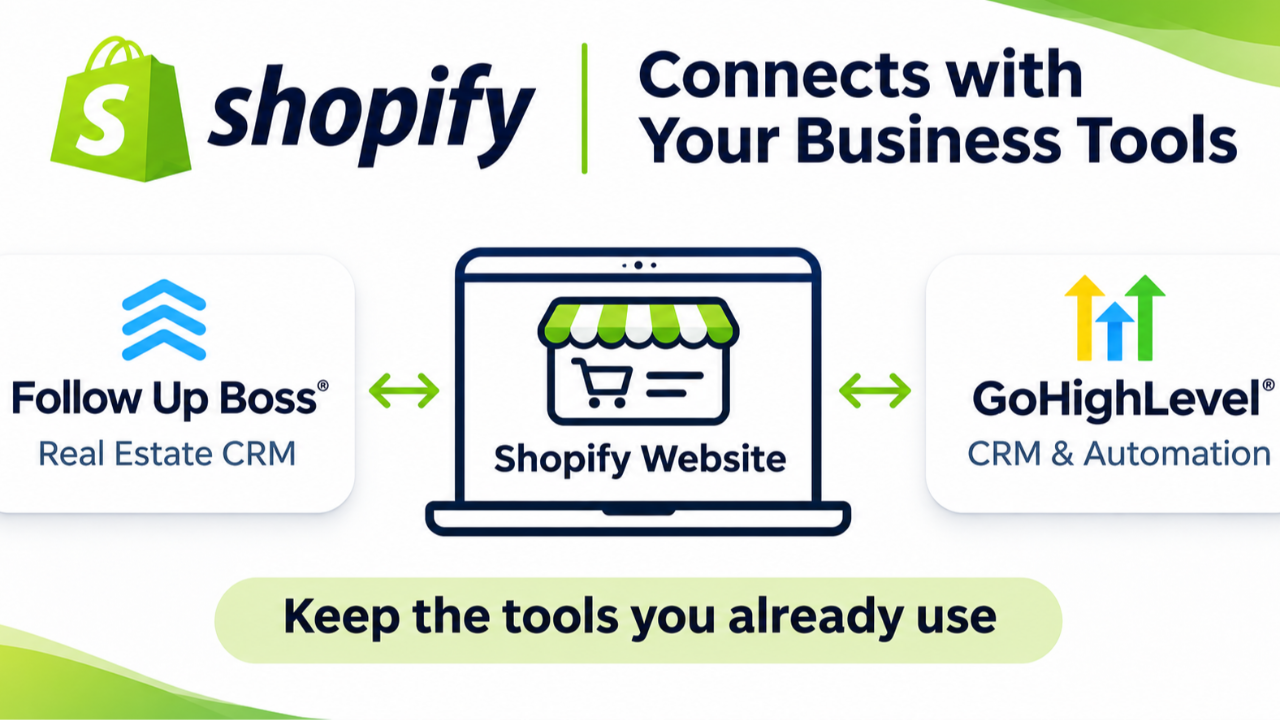
Absolutely. Shopify can do much more than process online orders. It can support your business website, help generate leads, publish content that attracts visitors from Google, collect customer information, and connect with the software you already use.
And here's something many service business owners haven't considered: You can eventually sell digital or physical products that complement your services, even if you don't manufacture those products or want to manage inventory.
If you're currently using Squarespace, Wix, GoDaddy, or WordPress, it's worth understanding how Shopify compares and what it could offer your business as you grow.
Why Would a Service Business Consider Shopify?
Think about what your website does for your business today. Perhaps it explains your services, provides contact information, displays testimonials, and allows potential customers to request an appointment or quote.
Those are important functions, but your website could potentially do more.
What if you eventually want to sell a downloadable workbook, offer paid workshops, create a membership, introduce subscription products, or sell merchandise that complements your services?
Shopify allows businesses to combine traditional website functionality with ecommerce capabilities. You can begin with service pages, contact forms, educational articles, and lead generation, then introduce additional products or services when the opportunity makes sense.
You don't have to operate an online retail business to benefit from a platform built for selling.
How Insurance Agents, Tax Professionals, Realtors, and Other Businesses Could Use Shopify
The opportunities depend on your industry, customers, and the services you provide. Here are several examples.
Insurance agents: An insurance agency could use Shopify to create pages for auto, home, life, and business insurance, publish articles answering common insurance questions, and collect quote requests. It could also sell educational materials, home inventory templates, business risk assessment worksheets, or other permitted digital resources. Insurance applications and regulated transactions would still need to be handled through appropriate licensed systems.
Tax professionals and accountants: A tax preparer could promote tax preparation, bookkeeping, and business consulting services while offering appointment requests and educational content. Later, the business might sell expense tracking spreadsheets, bookkeeping templates, tax preparation workbooks, or educational workshops. Sensitive tax records would remain in secure tax software or client portals.
Realtors: A real estate professional could publish neighborhood information, promote buyer and seller services, and collect inquiries. They could also sell homebuyer educational materials, relocation resources, or home organization products. Specialized property search features, such as MLS and IDX, would require compatible external solutions.
Wellness spas and beauty professionals: A spa could promote facials, massage services, or skincare treatments while selling skincare products, wellness accessories, gift cards, or subscription offerings. Customers could purchase products between appointments, creating opportunities for additional revenue.
Consultants and coaches: A consultant could start with service pages and consultation bookings, then add downloadable templates, online workshops, courses, memberships, or recurring educational subscriptions.
Contractors and home service providers: A contractor could display completed projects, publish service area pages, and collect estimate requests. Later, the business could introduce maintenance plans, educational resources, or complementary physical products.
The opportunity isn't limited to these industries. Restaurants, photographers, personal trainers, pet groomers, cleaning companies, and other service businesses could also use Shopify to combine services with relevant products.
What If You Want to Sell Physical Products but Don't Have Inventory?
This is one of the more interesting opportunities Shopify offers.
Many business owners assume selling physical products means purchasing inventory, storing merchandise, packaging orders, and handling shipping. But that isn't always necessary.
Shopify supports several approaches to selling products supplied by other businesses, including Shopify Collective, dropshipping integrations, print-on-demand services, and direct supplier relationships.
Shopify Collective: Sell Products From Other Brands
Shopify Collective allows eligible Shopify retailers to sell products from participating Shopify suppliers without purchasing inventory upfront.
For example, imagine you operate a Wellness Spa and want to offer moisturizers, facial cleansers, or other products that complement your treatments. You don't necessarily want to purchase hundreds of products and store them at your business.
With Shopify Collective, eligible retailers can connect with participating suppliers, select available products, and import them into their Shopify stores. When customers purchase those products, the supplier handles fulfillment and ships directly to the customer.
The retailer earns the difference between the selling price and supplier cost, before applicable expenses.
Think about the possibilities:
-
A fitness coach selling workout accessories and recovery products.
-
A cleaning company selling household cleaning supplies.
-
A pet groomer offering grooming brushes and pet care accessories.
-
A home organization consultant selling storage products.
-
A skincare professional offering complementary beauty products.
-
A realtor selling home organization or moving-related products.
Of course, the products should make sense for your audience. A business shouldn't start selling unrelated merchandise simply because it's available.
Shopify Collective also has eligibility requirements, and not every supplier or product is available to every retailer.
Learn more about Shopify Collective.
Other Ways to Find Products to Sell on Shopify
Shopify Collective isn't the only option.
Businesses can also use dropshipping apps to find suppliers offering products that can be sold through their stores. Print-on-demand services allow businesses to create branded merchandise, such as shirts, tote bags, notebooks, or other customized products, without purchasing inventory in advance.
Some businesses may prefer working directly with wholesalers or manufacturers and managing their own supplier relationships.
Before selecting products, review supplier reliability, product quality, shipping times, return policies, profit margins, and customer service responsibilities. Selling products without holding inventory can reduce certain operating costs, but it doesn't eliminate your responsibility for the customer experience.
Shopify's App Store: One of Its Biggest Advantages
One of the strongest reasons to consider Shopify is its extensive app ecosystem.
The Shopify App Store offers thousands of applications that can extend your website's functionality. Instead of relying entirely on features built into your website platform, you can add specialized tools as your business needs change.
Here are some examples:
It's important to understand that Shopify isn't the only platform capable of selling digital or physical products. Squarespace and Wix have e-commerce capabilities, and WordPress with WooCommerce can support sophisticated online stores.
The differences become more noticeable when you consider the specific apps, supplier relationships, automations, integrations, and commerce features your business may eventually need.
Should You Switch From Squarespace, Wix, GoDaddy, or WordPress?
Not necessarily.
Imagine you're a realtor with a Squarespace website. It displays your services, provides neighborhood information, and generates inquiries. If it's working well and you have no plans to sell products, there may be little reason to move.
But suppose you're planning to introduce paid homebuyer workshops, relocation resources, physical products from suppliers, and additional customer retention tools. At that point, it's worth comparing the cost and functionality of expanding your existing website against what Shopify offers.
The same applies to a tax professional using GoDaddy, an insurance agent using Wix, or a consultant using WordPress.
The question isn't simply which platform can build your website. It's which platform can support the way you want to attract customers, sell, and expand your business.
Switching platforms also requires careful planning. Existing URLs, redirects, search rankings, integrations, and customer data should be reviewed before making a move. A platform migration doesn't automatically improve SEO or increase sales.
What About SEO, Google Search Console, and Website Traffic?
A website can offer all kinds of functionality, but people still need to find it.
Shopify includes features for creating service pages, publishing blog articles, editing SEO titles and meta descriptions, managing redirects, and connecting analytics tools.
For example, a tax professional could publish articles answering questions people search for before tax season. A realtor could write about buying a home in a particular neighborhood. An insurance agent could explain common coverage questions, while a contractor could create helpful pages about services offered in specific cities.
These pages can attract potential customers who are researching a topic before they're ready to contact a business.
Google Search Console can show which searches cause your pages to appear in Google results, along with impressions, clicks, and average search positions. Google Analytics can help you understand website traffic and visitor behavior. Shopify Analytics provides additional information about store activity and sales.
Once visitors reach your website, the next step should be clear. They might request a quote, schedule a consultation, subscribe to emails, download a resource, or purchase a product.
This is where SEO, lead generation, website conversions, and customer retention work together.
Shopify provides tools to support these activities, but choosing Shopify alone won't improve search rankings or generate customers. Your content, website structure, search visibility, offers, and customer experience still need attention.
Can Shopify Help Your Business Generate Recurring Revenue?
For some service businesses, recurring revenue is another reason to consider Shopify.
A consultant could offer a monthly educational membership. A tax professional might provide an ongoing bookkeeping service package. A wellness business could offer a subscription for eligible products, and a coach might sell recurring access to training materials.
Compatible Shopify subscription and membership apps can support different recurring payment and access arrangements, although the functionality depends on the app and the type of offering.
You could also combine digital and physical products. For example, a wellness professional might sell a downloadable skincare workbook alongside complementary skincare products.
The opportunity is to create additional ways for existing customers to purchase from your business, rather than relying entirely on acquiring new clients.
Of course, recurring revenue only works when customers continue receiving something valuable. A subscription isn't automatically a good business model simply because the technology supports it.
Is Shopify Right for Every Service Business?
No. And that's worth saying. If your business needs only a few informational pages, a contact form, and basic appointment scheduling, Shopify may be more than you need. Another website platform might offer a simpler or less expensive solution.
Shopify also doesn't replace specialized software used for insurance policy management, tax preparation, real estate transactions, medical records, or other regulated activities.
And while Shopify has an extensive app ecosystem, additional applications can increase monthly expenses. Business owners should evaluate the total cost of the website, required integrations, and ongoing maintenance.
But if your business wants to combine services, lead generation, content marketing, digital products, physical merchandise, subscriptions, and customer retention, Shopify deserves consideration.
The decision should reflect your current needs and realistic business plans, not simply the number of features a platform offers.
Your Website Should Support the Business You Have Today and the Business You Want Tomorrow
You may be an insurance agent who only wants more quote requests today. A tax professional who wants to attract more clients through Google. A realtor who needs to generate buyer and seller inquiries. Or a wellness professional who wants to keep appointment bookings steady.
Those are all valid reasons to have a website.
But what if you eventually want to introduce educational products, sell complementary merchandise, build a membership, or create another source of revenue?
Shopify gives businesses the ability to combine website content, lead generation, ecommerce, customer communications, and integrations within one platform.
And with options such as Shopify Collective, eligible businesses may even be able to sell products from other suppliers without purchasing inventory upfront.
You don't have to sell products today to consider a website platform that gives you the opportunity to sell them tomorrow.
At Mastering P.o.P, we help businesses improve their online visibility, attract relevant website traffic, generate leads, and convert more visitors into customers through website design, SEO, content, email marketing, and customer retention strategies.
If you're considering Shopify for your service business, start by thinking about what you want your website to accomplish today and the opportunities you may want to pursue in the future.