Your company may be developing advanced technology, manufacturing specialized components, or providing engineering services that other businesses depend on. But can potential customers actually find you online?
When people think about technology companies, aerospace manufacturers, or engineering firms, they often picture large corporations with massive research facilities and multimillion-dollar budgets.
But these industries also include smaller businesses, independent manufacturers, specialized suppliers, and startups developing innovative products and services.
And just like businesses in other industries, they need customers.
The challenge? Having an advanced product, specialized knowledge, or years of technical expertise doesn't automatically mean the right people know your company exists.
That's where a well-planned marketing strategy can make a difference.
Not Every Technology or Engineering Company Is a Large Corporation
Consider some of the smaller businesses operating in highly specialized industries:
-
Aerospace parts manufacturers producing specialized components for aircraft, drones, or satellites.
-
Engineering firms providing design, testing, consulting, or technical services.
-
Technology startups developing software, robotics, automation, or advanced equipment.
-
Specialized suppliers selling materials, components, or equipment to larger manufacturers.
-
Deep tech companies developing artificial intelligence, biotechnology, semiconductor, or energy technologies.
-
Industrial manufacturers producing specialized machinery, equipment, or components for other businesses.
Many of these companies operate business to business (B2B), meaning their customers are other businesses rather than individual consumers.
They may have excellent products, experienced engineers, and impressive technical capabilities. But here's something worth considering.
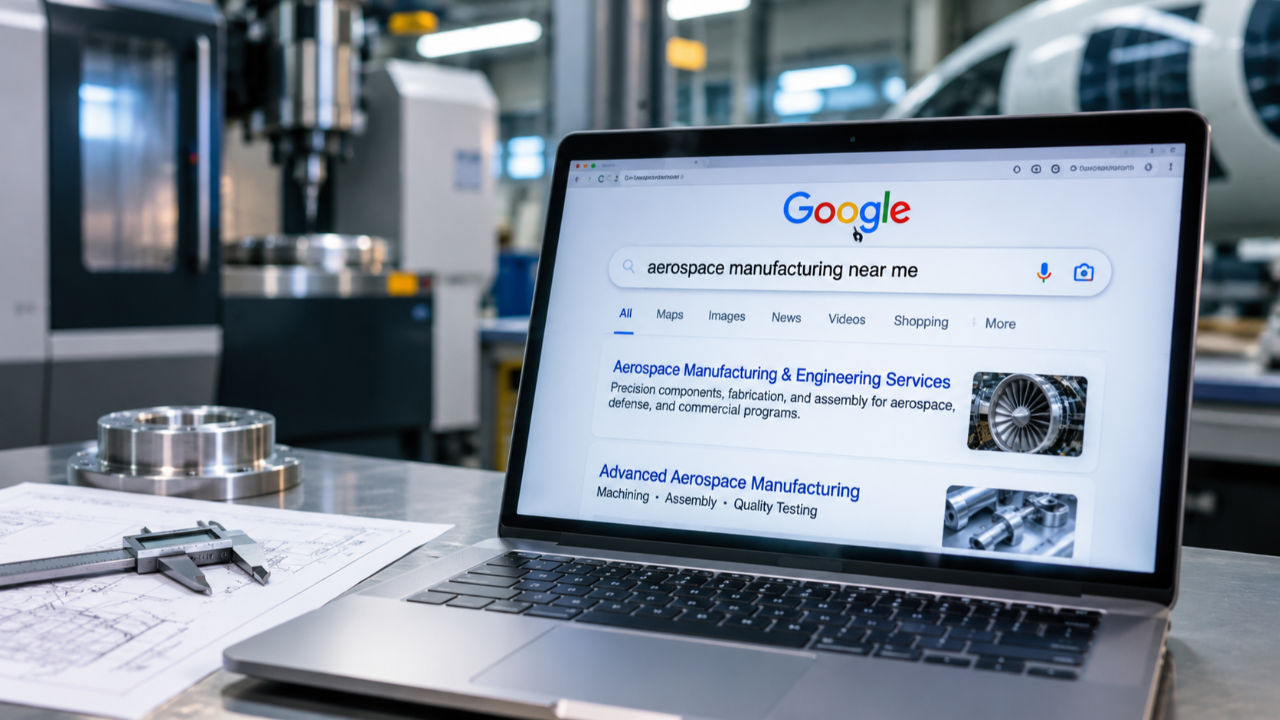
If a purchasing manager, engineer, or business owner searches Google for the products or services your company provides, will your website appear?
And if someone visits your website, will they understand what your company offers, who you serve, and how to contact you?
Those are marketing questions, not engineering questions.
Your Technology May Be Complicated. Your Marketing Shouldn't Be.
One of the challenges specialized businesses face is explaining highly technical products and services to potential customers.
Your engineers may understand every detail of your technology, but the person responsible for purchasing it may not have the same technical background.
For example, imagine a company manufacturing specialized components for commercial drones.
Its website might contain detailed engineering specifications, manufacturing processes, and technical terminology.
That information is valuable, especially to engineers evaluating potential suppliers. But what about the purchasing manager who simply wants to know:
-
Can this company manufacture the component we need?
-
What industries does it serve?
-
Does it offer custom manufacturing?
-
Can it handle the quantities we require?
-
What certifications or quality standards does it meet?
-
How do we request a quote?
Your website should answer those questions without forcing visitors to search through pages of technical information.
Good marketing doesn't mean removing technical details. It means presenting information in a way that helps potential customers understand your capabilities, evaluate your business, and take the next step.
Six Ways Specialized Businesses Can Improve Their Online Marketing
1. Help Potential Customers Find Your Business on Google
Your potential customers may be searching for specific products, manufacturing capabilities, engineering services, or technology solutions.
For example:
-
Aerospace precision machining services
-
Custom drone component manufacturing
-
Robotics engineering company
-
Aerospace electronics suppliers
-
Semiconductor design services
-
Industrial automation solutions
These are examples of searches relevant to different technical industries. Actual search demand and competition should be researched before targeting them.
Your website needs pages that clearly explain the products and services you offer using terminology your potential customers actually search for.
This is where search engine optimization (SEO) comes in.
SEO helps search engines understand your website and gives your business opportunities to appear when potential customers search for relevant products and services. And here's something worth remembering.
You don't necessarily need thousands of website visitors. You need visitors who are interested in what your company provides.
For a specialized manufacturer, a handful of qualified inquiries could be more valuable than thousands of visitors who have no intention of purchasing anything.
2. Explain Your Products and Services Clearly
Technical expertise is important, but your website also needs to communicate the business value of what you provide.
What problem does your product solve? Who uses it? What makes your company qualified to provide it?
For example, instead of simply listing a technical manufacturing process, explain the types of components you produce, the industries you serve, and the applications those components support.
You can still include detailed specifications, certifications, testing information, and technical documentation.
In fact, those details may be extremely important to engineers and technical purchasing teams. The goal is to organize the information so different visitors can find what they need.
Someone researching a supplier may need a general explanation first, while an engineer may want detailed specifications. Your website should accommodate both.
3. Reach Businesses That Need Your Products or Services
Many technology, engineering, and manufacturing companies sell to a relatively specific audience.
Their customers may include manufacturers, government contractors, research organizations, distributors, or other technology companies.
That means marketing to everyone isn't necessarily the best approach.
Instead, focus on identifying the businesses and decision-makers most likely to need what you provide.
This may involve:
-
Creating website content around specific industries and applications.
-
Targeting search terms related to your manufacturing or engineering capabilities.
-
Developing email outreach campaigns for potential business customers.
-
Building relationships with complementary businesses and suppliers.
-
Creating content that addresses common purchasing questions.
For example, an engineering firm specializing in industrial automation could create content explaining how its services help manufacturers improve production processes.
That content could attract businesses already researching automation solutions.
The objective isn't simply to increase website traffic. It's to attract potential customers who have a reason to contact your company.
4. Turn Website Visitors Into Qualified Inquiries
Getting people to your website is only part of the process. Once they arrive, what happens next?
Can they easily request a quote, schedule a consultation, submit project specifications, or speak with someone about their requirements?
Consider an aerospace manufacturer.
A general contact form asking only for a name, email address, and message may not collect enough information to evaluate a potential project.
A more helpful inquiry form might ask about:
-
The component or service needed.
-
Materials or technical requirements.
-
Estimated quantities.
-
Project timeline.
-
Relevant specifications or documentation.
An engineering consulting firm may need a different form that asks about the customer's project goals and technical challenges.
The point is to make it easy for qualified prospects to explain what they need while collecting enough information for your team to respond effectively. And don't overlook what happens after someone submits that form.
Does the customer receive confirmation? Does the appropriate person on your team receive the inquiry? Is there a process for following up?
Your marketing should support the entire process, from the first website visit to the initial business conversation.
5. Build Trust Before the First Conversation
Businesses purchasing advanced technology or specialized manufacturing services often need confidence in a supplier before making contact. They're not necessarily making an impulse purchase.
They may be evaluating multiple vendors, reviewing technical requirements, comparing capabilities, and determining which company can meet their needs.
Your website can help establish that confidence by presenting:
-
Relevant industry experience and technical capabilities.
-
Certifications and quality standards, when applicable.
-
Examples of completed projects or product applications.
-
Case studies showing how you've helped customers.
-
Information about your manufacturing or engineering processes.
-
Clear company information and contact details.
You don't need to reveal confidential customer information or proprietary technology to demonstrate your expertise.
You need to give potential customers enough information to determine if your company deserves further consideration. And remember, your online reputation doesn't exist only on your website.
Industry directories, professional associations, customer reviews, business listings, and mentions on other credible websites can also help potential customers learn about your company.
6. Use Website Data to Improve Your Marketing
How do you know if your marketing is actually working?
Are potential customers finding your website through Google? Which products or services are attracting attention? Are visitors contacting your company?
Tools such as Google Search Console and Google Analytics can help answer some of these questions.
For example:
Google Search Console can show which search queries are generating impressions and clicks, which pages appear in Google search results, and how your website's search visibility changes over time.
Google Analytics can help you understand how visitors interact with your website, which pages they visit, and which actions they take when the appropriate tracking is configured.
Together, these tools can help identify opportunities to improve website content, navigation, and lead generation.
For a specialized business, that information can be particularly valuable.
You may find that one engineering service attracts significantly more search interest than another, or that visitors frequently view a particular product page but rarely submit an inquiry.
Those findings give you something specific to investigate and improve.
Not Every Technology Startup Is Ready to Focus on Customer Acquisition
There's another important distinction that often gets overlooked. Not every technology company is at the same stage of business development.
Some aerospace and deep tech startups are still conducting research, developing prototypes, testing products, or seeking investors. They may not have a product or service available for customers to purchase.
For these companies, marketing priorities may involve explaining their technology, establishing credibility, attracting strategic partners, or communicating with potential investors.
That's different from an established manufacturer, engineering firm, or technology supplier that already has products and services available and wants to generate more business.
A company that's ready to sell needs a different marketing strategy from one that's still developing its technology.
Before investing in customer acquisition, businesses should consider a few questions:
-
Are our products or services currently available for purchase?
-
Do we know which types of customers we want to attract?
-
Can our company handle additional inquiries or orders?
-
Does our website clearly explain what we offer?
-
Do we have a process for responding to potential customers?
The answers help determine where marketing efforts should be focused.
For businesses already selling, improving online visibility, attracting qualified inquiries, and increasing website conversions may be immediate priorities.
For businesses still developing their products, establishing credibility and communicating their capabilities may be more appropriate.
How Mastering P.O.P. Helps Specialized Businesses Improve Their Marketing
At Mastering P.O.P, we believe your website should do more than explain what your company does.
It should help the right people find your business, understand your capabilities, trust your expertise, and contact you when they need your products or services.
With more than 20 years of experience in SEO and digital marketing, Mastering P.O.P. helps businesses develop marketing strategies focused on visibility, customer acquisition, and website performance.
Our areas of expertise include:
SEO & Visibility
Helping potential customers find your business through Google and other search platforms, including improving website structure, search visibility, and content targeting.
Content & Email
Developing content that explains your products and services, answers customer questions, and supports ongoing communication with potential and existing customers.
Outreach & Partnerships
Identifying opportunities to connect with businesses, organizations, referral partners, and other companies that may benefit from your products or services.
Lead Generation
Helping businesses attract qualified inquiries by improving how potential customers find, understand, and contact them.
Website Conversions
Improving website content, navigation, calls to action, and inquiry forms so visitors can take the next step.
Traffic & Analytics
Using website performance data to understand visitor behavior, monitor search visibility, and identify opportunities for improvement.
You don't necessarily need a large internal marketing department to begin improving your online presence. You need a strategy that fits your business, your customers, and your current stage of growth.
And if you're handling your own marketing or have a small team responsible for it, ongoing coaching can help you make informed decisions about where to focus your time and resources.
Your Company Has the Technical Expertise. Can Customers Find It?
You may have spent years developing your technology, improving your manufacturing processes, or building a team with specialized expertise. But potential customers still need a way to find you.
And once they do, your website needs to communicate why your company deserves their consideration.
That's something aerospace manufacturers, engineering firms, technology suppliers, and other specialized businesses have in common with companies across many industries.
Your business may be highly technical, but attracting customers shouldn't be unnecessarily complicated.
At Mastering P.O.P, we help businesses improve their online visibility, reach potential customers, and turn their websites into stronger marketing tools.
Is your marketing helping the right customers find your company?
Ready to get more customers finding your business?
Schedule a consultation with Mastering P.O.P., and let's talk about your business, your marketing challenges, and how we can help you improve your online visibility, attract qualified leads, and grow.
Schedule Your Consultation