If you're only using your booking software or point-of-sale (POS) system to manage appointments, process payments, and send reminders, you could be overlooking opportunities to bring customers back, increase revenue, and grow your business.
Think about all the customer information your business collects. Customer names, email addresses, phone numbers, appointments, purchases, services, spending history, and dates of previous visits.
Depending on your platform, you may also have information about birthdays, memberships, loyalty rewards, favorite products, and customer preferences.
That's valuable information! But here's the question.
Are you actually using that information to bring customers back and encourage them to purchase additional products or services?
We recently worked on customer segmentation and email marketing planning for a few Mastering P.o.P Done-for-You-Marketing members who uses a booking platform and separate email marketing software.
Our goal was to organize their customer information so they could communicate with different groups based on their interests, purchasing behavior, and previous visits.
Because if you want to grow your business, you need more than new customers coming through the door. You need a system that keeps existing customers engaged and gives them reasons to return.
Your Booking or POS System and Email Marketing Platform Have Different Jobs
Let's start with something many business owners overlook. Your booking or POS platform and email marketing software don't necessarily need to do the same things.
They should complement one another.
1. Your Booking System or POS Platform: Managing Appointments, Orders, and Customer Activity
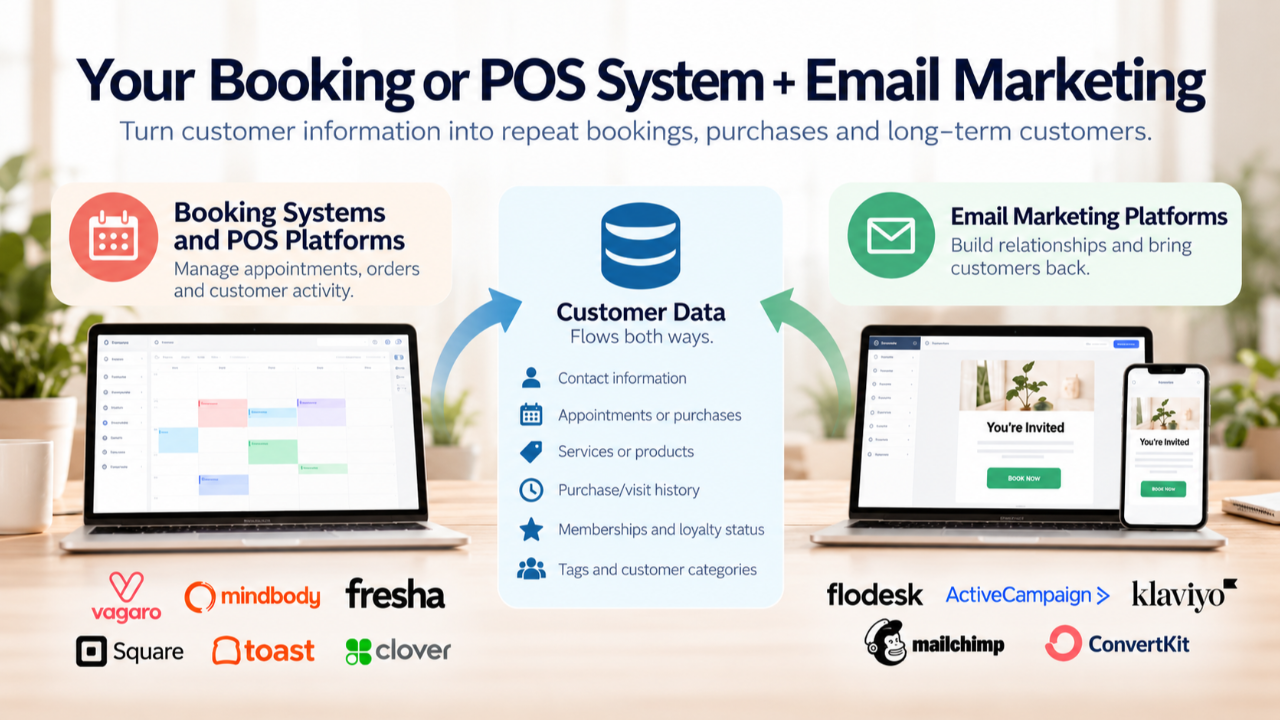
Platforms like Vagaro, Mindbody, Fresha, Square Appointments, Toast, Clover, and others are designed to help businesses manage their day-to-day operations.
For appointment-based businesses, these systems manage scheduling, customer visits, and services.
For restaurants and retail businesses, point-of-sale (POS) systems can track purchases, orders, customer information, and loyalty activity.
Depending on the platform and features available, your booking or POS system can handle:
-
Online appointments, reservations, and scheduling
-
Appointment confirmations and reminders
-
Cancellations and rescheduling
-
Online ordering, takeout, delivery, and catering orders
-
Customer profiles, appointment history, and purchase records
-
Payment processing and transaction history
-
Memberships, loyalty programs, packages, and rewards
-
Birthday messages and special offers
-
Rebooking reminders and follow-up communications
-
Customer tags, categories, and purchase preferences
-
Automated messages based on appointments, orders, or customer activity
For example, a restaurant using Toast or Clover may be able to identify customers who regularly order takeout, dine-in frequently, purchase catering, participate in loyalty programs, or frequently dine at the restaurant.
An appointment-based business might identify customers who regularly book certain services, purchase memberships, or haven't scheduled an appointment in several months.
This customer information becomes extremely valuable when connected to your email marketing strategy.
Instead of treating every customer the same, you can use their actual booking and purchasing activity to create targeted email campaigns that encourage repeat visits, additional purchases, and stronger customer relationships.
And here's the opportunity many businesses overlook: Your booking or POS system is already collecting customer information. The question is, are you using that information to market to those customers and bring them back?
2. Your Email Marketing Platform: Building Relationships and Bringing Customers Back
This is where platforms like Flodesk, ActiveCampaign, Klaviyo, Mailchimp, and other email marketing tools come into play.
Your email marketing platform can be used to educate customers, promote products and services, introduce new offerings, encourage repeat purchases, and reconnect with customers who haven't visited in a while.
For example: A restaurant customer who previously ordered catering could receive information about upcoming holiday catering menus, corporate lunches, or private event services.
Someone who regularly purchases pet grooming services could receive information about seasonal grooming packages, pet care tips, or boarding services.
A customer who hasn't purchased anything in six months could receive a personalized message introducing new products or reminding them about your business.
Someone who has spent hundreds or thousands of dollars with your business could receive special recognition, early access to new products, or an exclusive customer appreciation offer.
A new customer or email subscriber could receive a welcome series introducing your business, your team, and your products or services.
Same business. Different customers. Different messages.
That's where customer segmentation becomes so valuable.
What Is Customer Segmentation?
Customer segmentation is the process of organizing customers into groups based on shared characteristics, interests, purchases, or behavior.
Instead of sending the same email to everyone in your database, you can send messages that are relevant to specific groups.
For example, someone who regularly purchases catering services may be interested in corporate event packages.
Someone who books monthly haircuts may be interested in grooming products or additional services.
And someone who purchased a product once but hasn't returned could benefit from a follow-up introducing related products or services.
By segmenting customers, you can create more relevant communications rather than sending every promotion to everyone.
Start by Organizing Customers by Services or Products
Every business offers different products or services, and your customer segments should reflect what people actually purchase or show interest in.
For example, depending on your industry, you might create segments for:
-
Restaurants: Dine-in customers, takeout and delivery, catering, private events, corporate orders, loyalty members, and frequent diners.
-
Salons and Barbershops: Haircuts, coloring, styling, beard grooming, and hair treatments.
-
Fitness Studios: Personal training, group classes, yoga, Pilates, and memberships.
-
Pet Care Businesses: Grooming, boarding, daycare, training, and pet products.
-
Automotive Businesses: Oil changes, tire services, detailing, repairs, and maintenance.
-
Home Service Businesses: Plumbing, electrical, HVAC, repairs, and maintenance plans.
-
Retail Businesses: Product categories, repeat purchases, seasonal shoppers, and memberships.
Customers can belong to more than one segment.
- For example, someone who regularly orders takeout from a restaurant and has previously purchased catering could belong to both groups.
- A pet owner who books grooming appointments and occasionally uses boarding services could belong to both of those segments.
This allows you to send communications related to either service without sending unrelated promotions to your entire customer database.
The goal is to organize customers based on what they've purchased, what they're interested in, and how they interact with your business.
Segment Customers Based on Their Purchasing and Booking History
This is where your marketing becomes much more targeted. In addition to organizing customers by products and services, consider creating segments based on their relationship with your business.
New Customers
Customers who recently made their first purchase or booked their first appointment. They could receive a welcome series introducing your business, additional products or services, frequently asked questions, and reasons to return.
Customers Due for Another Appointment or Purchase
Customers whose previous activity suggests they may be ready to return.
For example, an automotive customer who purchased a maintenance service several months ago may be approaching their next recommended service interval.
A customer who purchases a particular product every month could receive a replenishment reminder.
These communications should reflect actual customer needs and purchasing patterns.
Customers Who Haven't Returned
What about someone who hasn't purchased anything in six months? Or a year?
These customers may have forgotten about your business, found another provider, or simply haven't had a reason to return.
You can create reactivation email campaigns that remind them of your products or services, introduce what's new, and encourage them to return.
Loyal Customers
Some customers consistently do business with you. They might visit your restaurant every week, book services monthly, maintain an active membership, or make frequent purchases. These customers deserve recognition. Consider customer appreciation emails, loyalty rewards, exclusive opportunities, or early access to new offerings.
High-Spending Customers
You may also have customers who spend significantly more than others. These customers might purchase premium services, place large orders, book multiple appointments, or purchase higher-priced products.
You could create special communications for them, including personalized recommendations, appreciation offers, or information about premium products and services.
Customers Interested in Additional Products or Services
Someone who orders takeout may also be interested in catering. A customer who purchases pet grooming services may need boarding. Someone who regularly books haircuts may be interested in hair care products.
Your email marketing can introduce complementary offerings without overwhelming customers with unrelated promotions.
The goal is to make your communications feel relevant, not random.
Your Booking or POS System Needs Organized Customer Information
Now here's something that can make or break this entire process. Your customer information needs to be organized.
If your booking or POS platform supports tags, customer groups, custom fields, or categories, take advantage of them.
For example, you might use labels such as:
-
Catering Customer
-
Frequent Diner
-
Loyal Customer
-
High-Value Customer
-
Inactive 6–12 Months
-
New Customer
-
Membership Customer
-
Purchased Specific Product
-
Interested in Additional Services
But there's an important distinction. Just because someone purchased one product doesn't mean they're interested in every product you sell. And simply having a customer's name in your booking system doesn't tell you which services they've actually received.
Ideally, your segments should be based on actual service history, purchases, expressed interests, or other reliable information.
The better your customer data, the more relevant your marketing can become.
Moving Customer Information From Your Booking or POS System to Your Email Marketing Platform
Let's say you already have hundreds or thousands of customer records in your booking or POS platform. How do you get that information into your email marketing software?
There are generally two approaches.
Option 1: Export and Import Your Customer Information
Many booking and POS systems allow you to export customer information into a spreadsheet or CSV file. You can then organize the information before importing eligible contacts into your email marketing platform.
Ideally, your export should include:
-
Customer name and email address
-
Products or services purchased
-
Last appointment or purchase date
-
Total spending or purchase history
-
Membership or loyalty status
-
Relevant tags or customer categories
-
Email marketing subscription status
Not every platform includes all this information in a standard export. Sometimes purchase history, service history, or customer details must be exported separately.
Sometimes, you'll need to contact your booking or POS platform's customer support team to request a more detailed export of your customer information.
Some platforms only provide basic exports with names, email addresses, and phone numbers. But for effective customer segmentation, you'll want more than that!
Ideally, you want access to appointment history, services or products purchased, last visit dates, total spending, memberships, and other customer details collected through the platform.
Don't settle for a basic contact list if more information is available. The more relevant customer data you can access, the better you can organize your segments and create targeted email campaigns that encourage repeat business.
Before importing, remove duplicate records, review missing information, and verify which customers have permission to receive marketing emails.
Having someone's email address because they booked an appointment or made a purchase doesn't automatically mean they've agreed to receive promotional emails.
Option 2: Connect the Two Platforms
An integration between your booking or POS system and email marketing software is ideal when it supports the information you need.
For example, when a restaurant customer places a catering order, the integration might update their customer record or add them to a catering customer segment.
When someone purchases a particular product, their information could be updated in the appropriate email segment.
When a customer books another appointment, their information could be updated so they don't continue receiving an outdated reactivation campaign.
This reduces manual work and helps keep customer information current.
However, not every integration transfers appointment history, purchase details, customer tags, or marketing consent. Some only synchronize basic contact information.
Before relying on an integration, confirm exactly which fields and activities it supports, how frequently information updates, and how unsubscribes are handled.
If a direct integration isn't available, a scheduled export and import process can still work.
Don't Forget About Capturing Email Addresses From Your Website
What about the people visiting your website who haven't booked an appointment or made a purchase?
Having a sitewide email sign-up form and an exit-intent pop-up gives you opportunities to capture interested visitors before they leave your website.
These forms can connect directly to your email marketing software, automatically adding subscribers to your general email list or an appropriate segment.
You can take this a step further by including product or service selections on your sign-up forms. For example, visitors could select the topics they're interested in, allowing your email platform to categorize them and trigger relevant automated emails.
Now you're not just marketing to existing customers. You're also building relationships with potential customers who have visited your website but haven't purchased or booked yet.
Just make sure visitors understand what they're subscribing to and have agreed to receive your marketing emails.
Set Up Email Automations That Work Without Constant Manual Effort
Once your customers are organized, you can begin creating automated email sequences.
These are emails triggered by customer actions, dates, or changes in their relationship with your business.
Here are a few examples.
Welcome Series
A new email subscriber receives a series introducing your business, products, services, and special offerings.
First Purchase or Appointment Follow-Up
After their first purchase or appointment, a customer receives helpful information related to what they purchased and an invitation to return.
Customer Reactivation
Someone who hasn't purchased or booked in several months receives a series of emails reminding them about your business and encouraging them to return.
Product or Service Education
Customers interested in particular products or services receive educational content, frequently asked questions, helpful tips, and related recommendations.
Membership and Loyalty Communications
Members receive updates about benefits, upcoming events, additional services, and opportunities to use their rewards.
Customer Appreciation
Your most consistent customers receive recognition, special offers, or invitations to exclusive events.
Abandoned Cart or Incomplete Booking Follow-Ups
Depending on the platform and available integrations, customers who leave products in their carts or start a booking without completing it may receive appropriate follow-up messages.
These automations can run throughout the month without you manually creating and sending every email.
Of course, you'll want to coordinate them with your booking or POS system so customers don't receive duplicate reminders or conflicting messages.
You Could Have Emails Going Out Every Day Without Emailing Everyone Every Day
This is one of the biggest benefits of segmentation. Imagine that on Monday, customers interested in catering receive an email about upcoming holiday menus.
- On Tuesday, customers who haven't purchased anything in six months receive a reactivation email.
- On Wednesday, new subscribers receive the next message in their welcome series.
- On Thursday, customers who regularly purchase certain products receive educational content or recommendations.
- On Friday, loyal customers receive a customer appreciation message.
Your business has sent emails throughout the week. But you haven't sent five emails to your entire customer database.
Different groups received different messages based on their interests and purchasing history. That's a much more thoughtful approach than repeatedly sending the same promotion to everyone.
You still need to manage email frequency. A customer who belongs to several segments shouldn't automatically receive every campaign.
Set reasonable sending limits, remove customers from sequences when they no longer qualify, and pay attention to unsubscribes and engagement.
Don't Forget Your Email Marketing Content Calendar
Automations are only part of your email marketing strategy. You should also have a content calendar for planned campaigns throughout the year.
Think about the opportunities your business has to stay in touch with customers.
Seasonal Campaigns
Spring promotions, summer specials, fall services, winter maintenance, and other products or services that are relevant during different times of the year.
Holidays and Special Occasions
Mother's Day, Valentine's Day, Thanksgiving, Christmas, birthdays, gift-giving seasons, and customer appreciation events.
Local Events
If you're a local business, consider what's happening in your community.
Are there neighborhood festivals, community events, local celebrations, sporting events, or seasonal activities that relate to your products or services?
- A restaurant could promote catering for local business events.
- A retail store could feature products related to a community celebration.
- A service business could participate in a local event and follow up with interested customers.
Classes, Workshops, and Business Events
If your business offers classes, special events, workshops, demonstrations, or educational sessions, email marketing can help promote them.
You can also send follow-up messages to attendees and introduce related products or services.
New Products and Services
- Launching a new product?
- Adding a new service?
- Opening another location?
- Introducing a new team member?
Your email list gives you an existing audience that may already be interested.
Educational Content
Don't make every email a sales pitch.
Your customers should also receive information that helps them solve problems, make informed purchasing decisions, and get more value from the products or services they've purchased.
And don't forget about your website's blog content!
If you're already publishing helpful articles on your website, repurpose that content into email campaigns. Share a brief introduction, highlight something useful, and include a link encouraging readers to visit your website for the full article.
This gives you another way to stay connected with customers while bringing them back to your website, where they can learn more, book services, or make additional purchases.
Customer Retention Should Be Part of Your Growth Strategy
Many businesses spend a lot of time trying to attract new customers. They work on their website, SEO, Google Business Profile, social media, and advertising.
All of those activities can help bring new people to the business. But what happens after someone becomes a customer?
- Do you have a system that encourages them to return?
- Do you know which customers haven't visited recently?
- Do you know which products or services your loyal customers purchase most often?
- Do you know who might be interested in your newest offering?
If you already have 500, 1,000, or 2,000 customer records, you may have opportunities sitting inside your existing database.
That doesn't mean everyone will purchase or book again. But organized customer information and relevant follow-up campaigns give you a way to reconnect with people who already know your business.
Customer retention isn't just about sending discounts. It's about maintaining relationships and giving people reasons to keep doing business with you.
Want to Scale Your Business? Build the Systems That Support Growth
As your business grows, manually remembering which customers need follow-ups becomes harder.
You shouldn't have to remember who ordered catering three months ago, which customers haven't returned, or who expressed interest in a new product.
Your booking or POS platform and email marketing system should help you manage that information.
With the right setup, you can build a repeatable process for welcoming customers, educating them, encouraging additional bookings or purchases, recognizing loyalty, and reconnecting with inactive customers.
And you can measure the results by tracking email engagement, booking activity, repeat purchases, returning customers, and revenue associated with your campaigns.
For one of our Mastering P.o.P. members, this is the type of work we're putting into place through our Done For You Digital Marketing Services.
We're organizing customer information, developing service-based segments, planning email automations, and building a marketing approach that supports customer retention alongside attracting new customers.
Because getting someone to make their first purchase or book their first appointment is only the beginning.
The real opportunity is building a business they want to return to.
Are You Using Your Customer Database to Generate More Business?
If your booking or POS platform is primarily being used for scheduling, processing payments, and sending reminders, take a closer look at the customer information you already have.
You may be overlooking opportunities to reconnect with previous customers, introduce additional products or services, and generate repeat business.
At Mastering P.o.P., we help business owners improve their websites, SEO, email marketing, customer retention, and other marketing activities through ongoing coaching and Done For You services.
GOT QUESTIONS? 20+ YEARS OF ANSWERS.
Learn more about Mastering P.o.P Services