
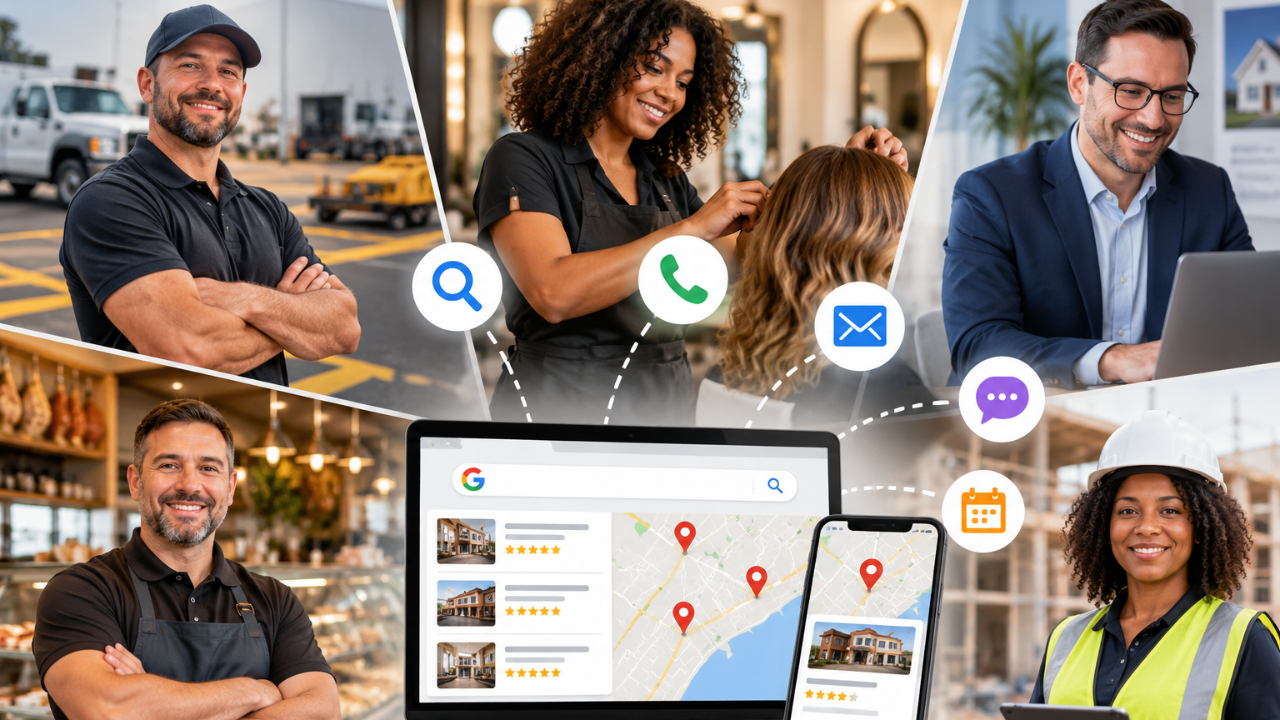
Why franchisors, corporations, contractor associations, and business networks should make marketing education part of their business development programs.
Imagine you're running an organization that supports 200 independent business owners.
You provide training, networking opportunities, mentorship, business development resources, and perhaps even a website or landing page dedicated to their specific service area or territory to help them get started.
Your members appreciate these benefits. They're attending events, building relationships, and learning how to operate their businesses.
But here's a question worth asking: How many of those business owners actually know how to get found by potential customers, turn website visitors into inquiries, and determine whether their marketing is working?
- A contractor might be excellent at completing projects but struggle to generate a steady flow of new jobs.
- An insurance agent might have a company-provided webpage but have little understanding of how people find it.
- A hairstylist might have a beautiful salon suite and thousands of Instagram followers but still have empty appointment slots.
- A distributor might have strong relationships with existing accounts but no consistent system for reaching new businesses.
These are marketing challenges that affect independently operated businesses across nearly every industry.
And they're challenges that franchisors, corporations, associations, and other organizations supporting large networks of business owners are in a unique position to help address.
A Business Network Can Provide Excellent Support and Still Leave a Marketing Knowledge Gap
Many organizations already invest considerable resources in helping their members succeed.
Contractor associations may offer education, certification assistance, bidding workshops, mentorship, and networking opportunities.
Franchisors may provide operational training, brand recognition, marketing materials, websites, and business systems.
Corporations working with subcontractors and independent contractors may offer supplier development programs, professional education, and opportunities to compete for contracts.
Salon suite companies may provide attractive workspaces, business resources, and opportunities for independent beauty professionals to build their own brands.
These benefits matter. But learning how to run a business and learning how to consistently attract customers are two different things.
A business owner can understand pricing, operations, customer service, and compliance while still having no idea why competitors appear above them on Google.
They may not know what keywords potential customers are searching for, how to improve and optimize their Google Business Profile, or whether their website is generating actual inquiries.
Marketing education shouldn't replace the resources an organization already provides. It should complement them.
Look at the Businesses Already Operating Within These Networks
Consider how different business networks operate and the marketing challenges their independent operators may encounter.
G-FORCE Parking Lot Striping: National Brand Recognition Meets Local Customer Demand
G-FORCE Parking Lot Striping is a useful example of a franchise network serving local markets.
Its independently operated locations provide services such as parking lot striping, pavement marking, and related work for businesses and property owners.
G-FORCE publicly describes a franchise support system that includes branding, websites, marketing, training, and corporate assistance.
That's an important foundation. But imagine a local parking lot striping franchise owner who wants to attract more property management companies, shopping centers, apartment communities, and commercial facilities.
What are those potential customers typing into Google?
They might search for:
-
Parking lot striping company near me
- Parking lot striping [city]
- Parking lot striping services
-
Commercial parking lot painting
-
ADA parking lot striping contractor
-
Warehouse floor marking services
-
Parking lot restriping for apartment complexes
Does the local franchise location appear when someone searches those phrases? Or does the franchisor's corporate website appear instead?
If a potential customer contacts the corporate office, how is that lead handled? Is it automatically directed to the franchisee responsible for that territory, or could the opportunity be missed?
Does the franchisee have a dedicated webpage for their service area that clearly explains the services they offer? Can potential customers easily request an estimate or contact the local franchise owner directly?
And does the franchisee know where their leads are coming from, whether through their own website, Google Business Profile, corporate referrals, or other marketing efforts?
These are questions worth answering even when a franchisor already provides a website, landing page or marketing support.
A franchise website is a starting point. Understanding how to attract local customers through that website is an ongoing business skill.
Farmers Insurance: Why an Agency Webpage May Not Be the Entire Marketing Strategy
Insurance agencies face a similar challenge.
Farmers Insurance has an established national brand and an online system for helping consumers find local agents.
That visibility is valuable. But consider an individual agency owner trying to build recognition in a specific community.
Potential customers may be searching for:
-
Homeowners insurance agent in Marina del Rey
-
Business insurance for contractors
-
Insurance for rental properties
-
Local insurance agent near me
-
Commercial insurance for small businesses
A company-provided agency webpage can help establish an online presence. However, where permitted by the carrier's branding, advertising, compliance, and technology requirements, an independently owned website may offer additional opportunities.
An agency website could and should feature locally relevant educational articles, information about the agency's community involvement, answers to common insurance questions, and clear ways to request assistance.
It may also provide additional opportunities to measure website activity and understand what interests prospective customers.
The goal isn't to replace the carrier's website or approved systems. It's to determine whether an additional, properly approved online presence could help the agency reach and serve more customers.
The more effectively an individual agency develops its local business, the more potential value it can contribute to the larger insurance network.
Salon Republic, Phenix Salon Suites, and Sola Salon Studios: Independent Businesses Under One Roof
Salon suite companies offer another compelling example.
Salon Republic, Phenix Salon Suites, and Sola Salon Studios provide environments where independent beauty and wellness professionals can operate their own businesses.
These professionals may include hairstylists, barbers, estheticians, nail technicians, makeup artists, and other service providers.
They have something important in common: each professional is responsible for attracting and retaining clients.
Imagine a salon suite location with 40 independent professionals.
One stylist specializes in hair extensions. Another provides natural hair services. Another focuses on bridal styling. An esthetician offers facials and skincare treatments. Each professional may be trying to reach a different customer.
A salon suite directory can help customers discover who works at the location. Social media can help professionals showcase their work. But what happens when a potential customer searches Google for a particular service?
Someone searching for "bridal hairstylist in Culver City" isn't necessarily looking for the name of a salon suite company. They're looking for someone who can provide a specific service.
That creates opportunities for education around Google Business Profile optimization, local SEO, service-specific website pages, customer reviews, appointment booking, and follow-up marketing.
For an independent stylist, understanding how to appear in local search results could be just as valuable as learning how to manage expenses or price services.
For the salon suite company, helping tenants strengthen their businesses may contribute to tenant satisfaction, retention, and the overall appeal of its locations.
Boar's Head and Independent Distribution Businesses: Relationships Still Need a Way to Grow
Distribution businesses offer a different marketing challenge.
Consider the types of independent distribution businesses associated with established food brands such as Boar's Head.
Their customers may include delis, restaurants, specialty food retailers, and other commercial accounts. These businesses often depend heavily on relationships, reliability, product knowledge, and direct sales.
Those strengths are essential. But an independent distributor or service provider may also benefit from knowing how to identify prospective commercial accounts, introduce services professionally, maintain a contact list, and follow up with businesses that haven't responded.
Email marketing, text messaging (SMS), push notifications, and automated follow-up tools can help businesses reach more potential customers, stay connected with existing customers, and scale their outreach without having to contact everyone individually.
For example, instead of manually emailing prospective accounts one at a time, a business might use approved software to manage contact lists, personalize outreach, schedule follow-ups, and track responses.
The important lesson isn't simply how to send more emails. It's how to reach appropriate business contacts with relevant messages, respect email marketing laws, and develop a repeatable system for building relationships.
For distributor networks, marketing education may be especially valuable when it focuses on finding new accounts and strengthening existing customer relationships.
Contractor Associations Have an Opportunity to Expand Their Business Development Resources
Now consider organizations such as United Black Contractors and the National Association of Minority Contractors.
Contractor associations play an important role in connecting business owners with education, networking, mentorship, and business development opportunities.
Programs involving bidding, bonding, certification, procurement, strategic planning, and contractor readiness can help members compete for larger opportunities. But consider what happens between those opportunities.
- A subcontractor may not have an active bid available this month.
- An independent contractor may want to diversify beyond referrals from general contractors.
- A service provider may want to attract commercial property owners directly.
How are these businesses finding new customers while they pursue larger contracts? That question creates room for marketing education.
A contractor who understands local search can begin improving visibility for services such as commercial electrical work, painting, parking lot maintenance, plumbing, or janitorial services.
A subcontractor who understands website analytics can see whether visitors are finding the business through search engines, referrals, or other websites.
An independent contractor who understands lead follow-up can build a more consistent process for responding to inquiries and reconnecting with previous customers.
These skills can complement an association's existing education, training, mentorship, strategic planning, and business development resources.
And they can remain useful long after a particular networking event or procurement workshop has ended.
Having Google Analytics Connected Is One Thing. Understanding the Information Is Another.
Let's say an independent contractor has a website. Google Analytics is installed.
The owner logs in and sees that 500 people visited the website last month. Is that good news? Maybe. But the number alone doesn't tell us much.
- What if 400 visitors left without looking at another page or taking any action?
- What if the website received plenty of visitors but only two people completed the estimate request form?
- What if most visitors came from outside the contractor's service area?
Or what if a particular service page is bringing in highly interested visitors, but the business owner hasn't noticed?
Having Google Analytics connected to your website is one thing. Understanding what the information is telling you and using it to improve your marketing is another.
Business owners should know how to answer questions such as:
-
Where are website visitors coming from?
-
Which services or pages are attracting the most attention?
-
Are people visiting the website and leaving without taking action?
-
Are visitors clicking buttons, submitting forms, booking appointments, or making purchases?
-
Which marketing activities are generating inquiries?
-
Are visitors finding the business through Google, social media, referrals, or paid advertising?
-
Is the website attracting people in the geographic areas the business serves?
Not every answer appears automatically. Some activities, such as form submissions, calls, and appointment requests, require the correct tracking setup.
And a short visit doesn't always mean something went wrong. Someone may find a phone number quickly and call without exploring other pages. That's why interpretation matters.
What a Business Owner Could Learn From Their Website Data
Imagine a commercial cleaning company discovers that its office cleaning page receives 300 visits a month, but its medical office cleaning page receives only 20.
At first glance, the owner might assume office cleaning is the more promising service. But further investigation reveals that visitors to the medical office cleaning page submit inquiries more frequently.
That information could influence what the business does next. Maybe the company should improve the medical cleaning page, create additional content about that service, or develop outreach campaigns targeting medical facilities.
Without reviewing the data, the owner might continue spending money promoting services that aren't producing the strongest inquiries.
This is why marketing reporting should lead to better decisions, not simply more charts and numbers.
Google Business Profile and Local SEO: Two Areas Business Owners Cannot Afford to Ignore
For businesses that serve local customers, Google Business Profile can be one of the most important places to start.
Consider a commercial electrician in Los Angeles. When a property manager searches for an electrician, Google may display a map with local businesses, reviews, contact details, and websites.
If the electrician hasn't claimed or optimized an eligible Google Business Profile, the business may be missing opportunities to appear in relevant local searches.
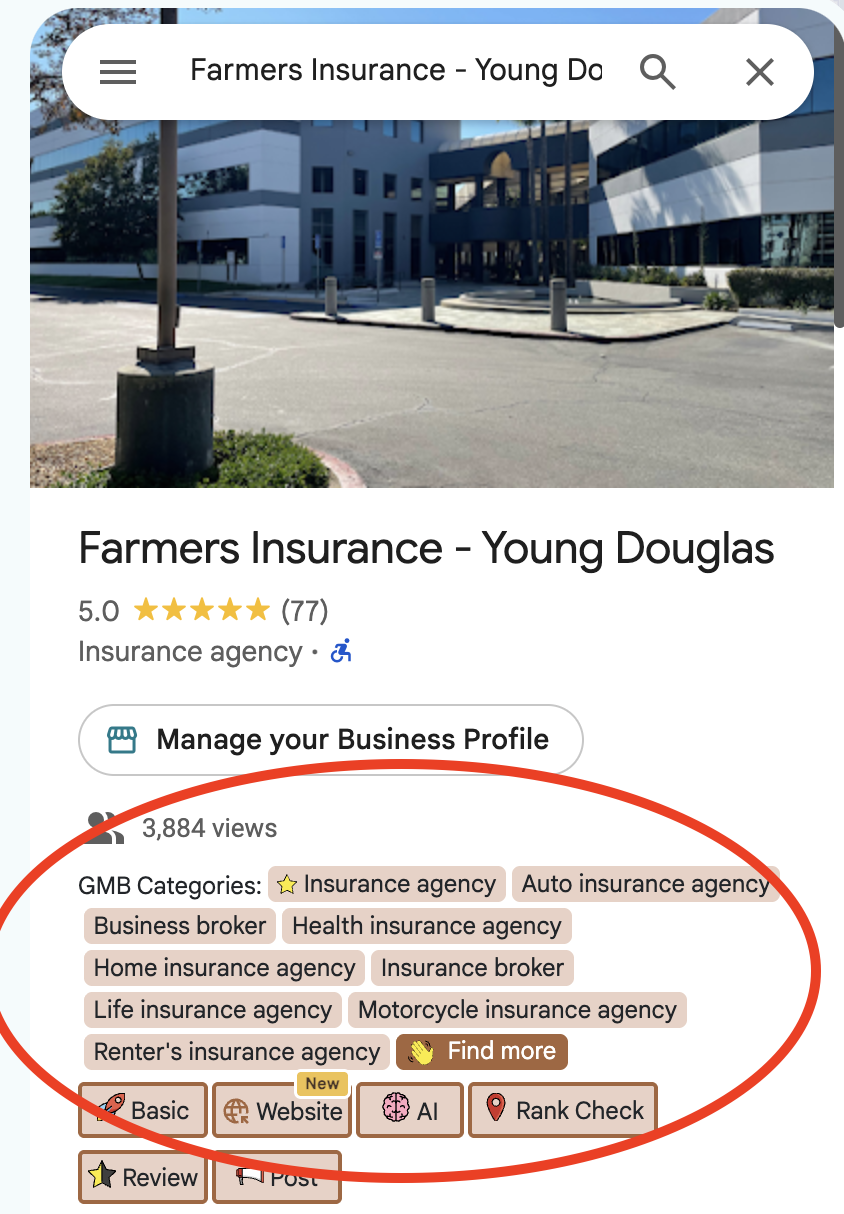
Optimization involves more than adding a phone number. It includes selecting accurate business categories, keeping contact information current, explaining services, maintaining appropriate business hours, adding useful photos, and managing customer reviews.
But did you know your Google Business Profile offers even more opportunities to market your business?
-
Share your blog content. You can publish a short excerpt from a blog post as a Google Business Profile update and include a link to the full article on your website.
-
Track phone calls. You can use a dedicated call-tracking number as your primary number while keeping your regular business number as an additional number, provided you follow Google's phone number guidelines.
-
Track website clicks. You can add a UTM tracking code to your website link so you can identify visits coming from your Google Business Profile in Google Analytics. Google Search Console can separately show how your website performs in Google Search, but it doesn't report those UTM-tagged clicks.
-
Choose multiple business categories. You're not limited to one category. You can select a primary category and additional relevant categories that accurately describe your business.
-
Showcase your products and services. Depending on your business type and profile features, you can add services, descriptions, and products to help potential customers understand what you offer.
These are features many business owners may not know exist, even if they've had a Google Business Profile for years.
And that's exactly why ongoing digital marketing education matters. Having the tools available is one thing. Knowing how to use them to attract customers, track results, and improve your marketing is another.
Local SEO goes further.
It involves helping search engines understand what services a business offers, where it operates, and which customer questions its website answers.
For example, a contractor's website might include separate pages explaining parking lot striping, ADA-compliant markings, warehouse safety lines, and commercial pavement maintenance.
Those pages give prospective customers more information and create opportunities for the business to appear for relevant searches.
A Google Business Profile and a well-structured website can work together. But neither should be treated as a one-time setup project.
Business owners need to understand how to maintain their information, evaluate their visibility, and make improvements over time.
Are Your Members Showing Up When Customers Search Using AI?
Search behavior is changing. People still use Google, but they're also asking questions through AI-powered tools and search experiences.
Instead of typing a few keywords, someone might ask: "How do I find a reliable commercial cleaning company for a medical office?"
Or: "What should I look for when hiring a parking lot striping contractor?"
Or: "How can I find a hairstylist who specializes in natural hair near me?"
These questions create another reason for businesses to publish clear, useful information about their services.
A website that explains what the business does, who it serves, where it operates, and what customers should consider before hiring may be easier for search systems to understand.
That doesn't guarantee a business will appear in an AI-generated answer. But it does give business owners another reason to pay attention to the quality and usefulness of their online information.
Marketing education should now help business owners understand both traditional search visibility and emerging AI search experiences, without promising rankings or results that no one can guarantee.
Tracking the Right Keywords Matters More Than Tracking Hundreds of Keywords
A keyword is simply a word or phrase someone types into a search engine. But not all keywords indicate the same intention.
- Someone searching "what is parking lot striping" may be gathering information.
- Someone searching "parking lot striping company in Long Beach" may be much closer to requesting a quote.
Similarly, a person searching "how to become a hairstylist" has a different need from someone searching "hair extensions appointment near me."
These distinctions matter. Businesses can waste time creating content around phrases that attract visitors who aren't likely to become customers.
Keyword research helps identify what potential customers are searching for and how closely those searches match the business's services.
Keyword tracking helps owners monitor whether their websites are becoming more visible for those phrases.
Competitor research adds another layer. If a nearby competitor consistently appears for valuable searches, the business owner can examine the competitor's website structure, service pages, customer reviews, and publicly visible content to identify areas for improvement.
The goal isn't to copy competitors. It's to understand the market and make informed decisions about where to focus marketing efforts.
Getting More Leads Is Only Half the Challenge
Suppose a contractor receives ten inquiries from potential customers this month.
- Three people receive estimates.
- Two never hear back.
- Five inquiries sit unanswered in an email inbox.
The business may think it needs more advertising. But the first opportunity could be improving how existing inquiries are handled.
Marketing education should include what happens after someone contacts the business.
That may involve learning how to:
-
Respond to new inquiries promptly.
-
Organize potential customer information.
-
Follow up after sending an estimate.
-
Reconnect with previous customers.
-
Send useful reminders or updates.
-
Use email tools to communicate with larger groups of appropriate contacts.
-
Track which inquiries turn into actual customers.
A business doesn't necessarily need complicated software to begin. It needs a process that the owner understands and can maintain.
For many small businesses, improving follow-up can be as important as attracting more website visitors.
Why Marketing Education Can Benefit the Entire Business Network
When one independent business owner improves their marketing, the immediate benefits belong to that business.
But when dozens or hundreds of operators become better at attracting and retaining customers, the larger organization may benefit as well.
For franchisors, stronger local marketing may support franchisee growth and improve the overall strength of the franchise network.
For salon suite operators, successful independent professionals may be better positioned to maintain their businesses and continue renting their spaces.
For corporations working with contractors and subcontractors, business development support can help strengthen relationships with independent service providers.
For associations, offering relevant marketing education can create another reason for members to remain engaged and recognize the value of membership.
The potential benefits go beyond providing another webinar.
Organizations can help members develop skills they use repeatedly in their businesses. And importantly, they can begin evaluating whether those skills are translating into measurable marketing progress.
What Would a Network-Wide Marketing Education Program Actually Look Like?
An organization doesn't necessarily need to hire a full-time marketing department or build an entire training curriculum.
A network-wide program could give participating business owners access to ongoing coaching, tools, reporting, and educational resources.
For example, members might receive help with:
- Google Business Profile and local search: Improving how customers find their businesses in their service areas.
- Website performance: Understanding which pages attract visitors and which ones generate inquiries.
- Keyword and competitor tracking: Monitoring relevant searches and identifying opportunities to improve visibility.
- AI search visibility: Learning how customers discover businesses through AI-powered search experiences.
- Lead generation: Finding ways to attract more potential customers through websites, search engines, content, and outreach.
- Email marketing and customer follow-up: Using tools to organize communications, contact appropriate prospects, and maintain customer relationships.
- Ongoing coaching: Getting help understanding reports, choosing priorities, and addressing marketing challenges as they arise.
- Recorded training and resources: Giving busy business owners the ability to learn on their own schedules.
The objective is not to turn every contractor, insurance agent, stylist, or distributor into a marketing expert.
It's to help them understand enough to make better decisions, recognize opportunities, and know when to ask for help.
How Can an Organization Know Whether the Training Is Working?
This is an important question, especially when a corporation or association is paying for access.
Imagine an association sponsors marketing coaching for 75 independent contractors. After several months, the association may want to know:
- How many contractors are actively participating?
- Are members improving their online visibility?
- Have they optimized their Google Business Profiles?
- Are their websites receiving more relevant traffic?
- Are they beginning to track inquiries and conversions?
- Are members applying what they learn?
These questions are the foundation of a marketing progress report. A report could summarize participation, completed marketing activities, and measurable changes where the necessary information is available.
For example, it might show that participating businesses have completed Google Business Profile improvements, begun tracking valuable search terms, or configured website conversion tracking.
Where appropriate data access and consent exist, the report could also summarize changes in search visibility, traffic, and lead activity.
However, progress reporting should be realistic. Not every member will have a website. Not every business will have the same tracking systems. And a change in rankings doesn't automatically translate into new revenue.
The value of reporting is that it helps an organization understand what is happening and where members may need additional assistance.
That is much more useful than simply reporting how many people attended a webinar.
Industry-Specific Training Makes the Education More Relevant
A hairstylist and a commercial subcontractor don't attract customers in the same way. That's why organizations may want training tailored to the businesses they serve.
For example, a contractor association might offer a session on how contractors can attract commercial property managers through Google.
A salon suite organization might offer training on getting more appointment bookings through local search and customer reviews.
An insurance agency network might focus on approved local marketing, educational website content, and measuring lead inquiries.
A distribution network might focus on reaching prospective commercial accounts and improving customer follow-up.
The underlying marketing principles may be similar, but the examples should reflect the audience.
This makes it easier for members to see how the training applies to their businesses.
Association-Sponsored Programs, Corporate-Sponsored Programs, and Preferred Partner Rates
There isn't one payment structure that works for every organization.
An association with hundreds of members may have a different budget and decision-making process from a corporation that works with subcontractors or a franchisor that supports independently owned locations.
Here are three possible approaches.
Preferred Partner Rate
An organization negotiates access to a marketing coaching program at a preferred partner rate.
Individual business owners choose whether to participate and pay for their own memberships.
The organization can promote the opportunity as an additional member benefit without covering the full cost.
This approach may be appropriate for contractor associations, professional organizations, and other networks that want to expand their educational resources.
Association-Sponsored Program
An association covers some or all of the cost of marketing training for participating members.
For example, an association might sponsor a pilot group of 20 contractors before considering a larger program.
The association could offer the program as part of its member education, business development resources, or mentorship initiatives.
This approach allows the organization to decide how many members it wants to support and what level of training is appropriate.
Corporate-Sponsored Program
A corporation, franchisor, or network operator pays for marketing support for selected businesses within its network.
For example, a franchisor might sponsor coaching for newer franchisees who need additional help developing their local customer base.
A company that works with independent service providers might sponsor training focused on local visibility, customer acquisition, and follow-up.
A salon suite operator might explore offering marketing education to tenants as an additional business support benefit.
Corporate-sponsored programs can also include customized training, group onboarding, and agreed-upon progress reporting.
The important point is that the organization can choose a structure that fits its budget, goals, and participating businesses.
Introducing the Mastering P.o.P. Franchise & Business Network Partnership Program
At Mastering P.o.P (Profitability Over Popularity), we work with business owners who want to better understand their marketing, improve their online visibility, and attract more customers.
Our partnership program extends that support to organizations serving networks of independently operated businesses.
Rather than asking an association, corporation, or franchisor to develop its own marketing curriculum, the program provides access to ongoing coaching, training resources, keyword and visibility tracking, and guidance from a marketing professional with more than 20 years of experience.
Participating businesses can learn about Google Business Profile optimization, local SEO, website performance, AI search visibility, lead generation, email outreach, and customer follow-up.
The program also includes live Zoom coaching and recorded resources so business owners can continue learning while running their businesses.
Organizations can explore preferred partner pricing for individual members or discuss a customized company-sponsored or association-sponsored program.
The goal is straightforward: Help more of the businesses within your network understand how to attract customers, measure what's working, and make better marketing decisions.
Before Adding Another Member Benefit, Ask These Questions
If you lead a contractor association, franchise organization, corporation, salon suite network, or professional membership group, consider asking:
-
Do our members know how potential customers are finding their businesses online?
-
Do they understand the difference between website traffic and actual customer inquiries?
-
Are they monitoring the search terms that matter to their businesses?
-
Do they know how to improve their Google Business Profiles and local visibility?
-
Are they learning how AI-powered search may affect customer discovery?
-
Do they have a consistent process for following up with leads?
-
Are we providing ongoing marketing education, or mainly one-time workshops?
-
If we're investing in marketing support, can we evaluate whether members are making progress?
The answers may reveal an opportunity to expand the value your organization already provides.
Helping Independent Businesses Grow Strengthens the Network Around Them
Franchisors, corporations, and associations already understand the importance of education, mentorship, and business development.
Marketing deserves a place in that conversation, because providing someone with a business opportunity, a website, a workspace, or a professional network is only part of the equation.
Helping them understand how to attract customers and grow their business is another.
And when more independent operators become stronger businesses, the organization supporting them has an opportunity to become stronger too.
Interested in providing ongoing marketing education to the businesses in your network?
Learn more about the Mastering P.o.P. Franchise & Business Network Partnership Program, including preferred partner rates, association-sponsored programs, and corporate-sponsored marketing support.
Brand references in this article are illustrative examples of business and franchise networks. They do not imply endorsement, affiliation, or participation in the Mastering P.o.P. Partnership Program.